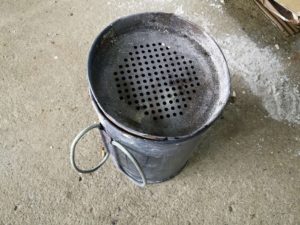
Thermal decomposition test result of industrial filter
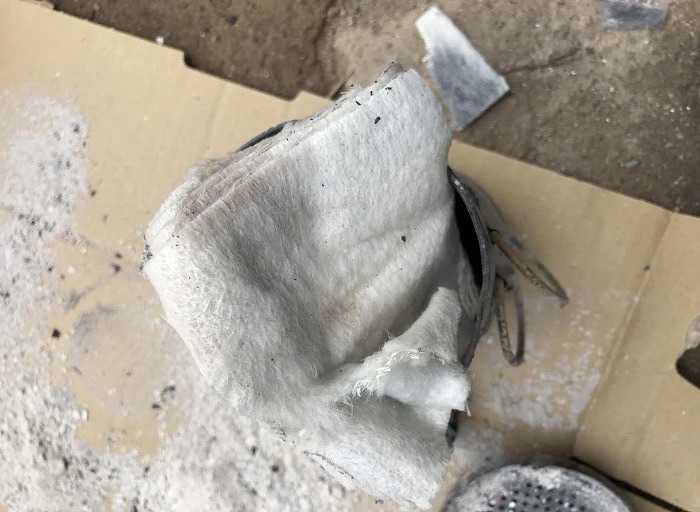
At a high temperature site such as an ironworks laboratory, we undertook a test by receiving a test request from a company that has developed a filter that absorbs dust. It is a test of the power of the main filter and a test of whether the used filter can be decomposed.
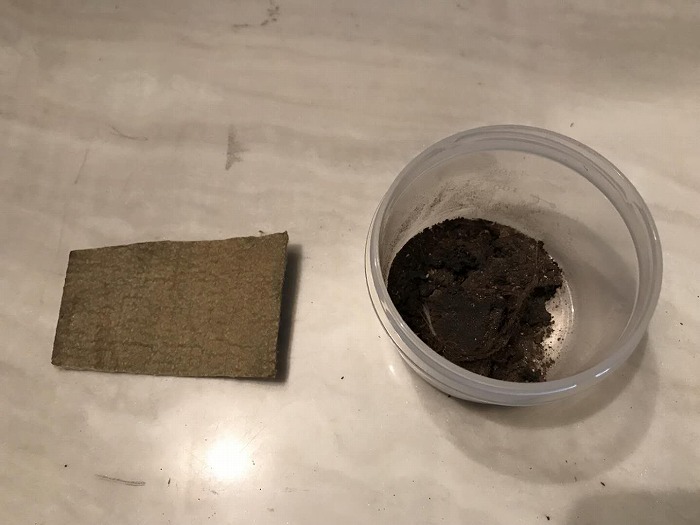
Used filters have been completely disassembled. Actually, the capacity has been reduced to about 1/100, which is a satisfactory result.
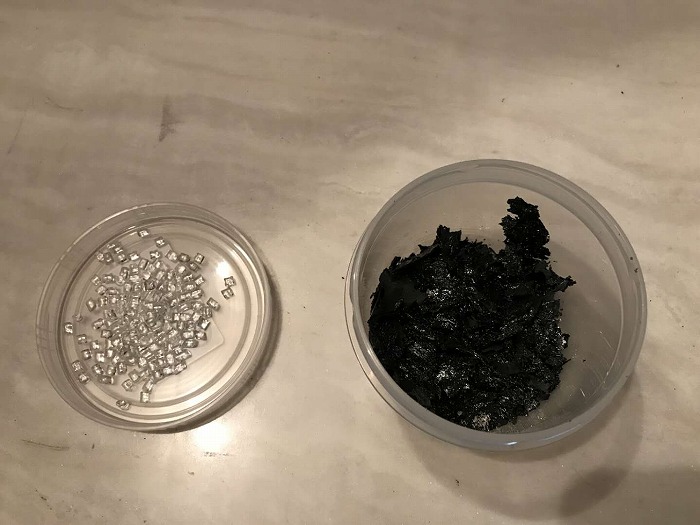
It is a PET.
It changed to a state like laver. Normally, it is unlikely that the raw material is really thermally decomposed, so all the members who witnessed are surprising results.
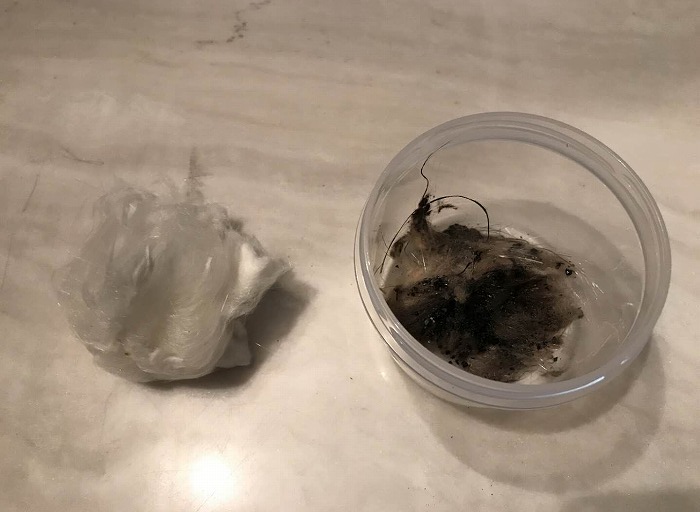
It is glass thread (fiber).
Just blackened, no change. After all, glass is inorganic, so it can not be processed.
On the contrary, if this fiber melts and it is hardened like rain, it is “incineration”.
It is the result of a machine not pyrolyzed.
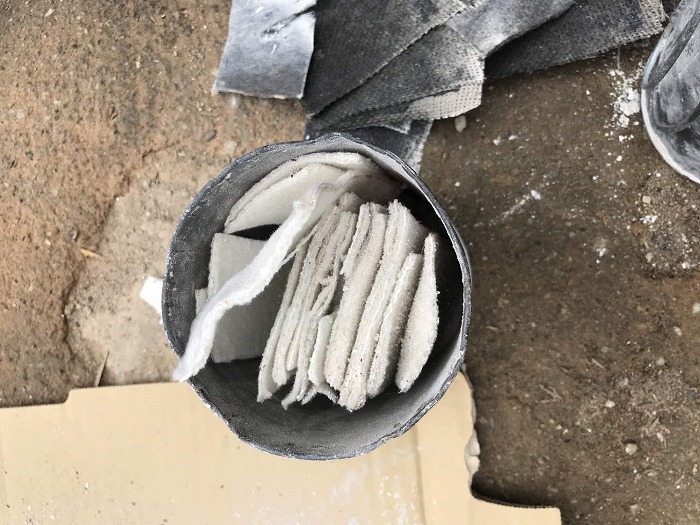
It is a filter of glass fiber 90%.
I carried out thermal decomposition for 3 days, but it was intact.
The can that we put together is weaker. To this result, the employees of the filter manufacturer are very satisfied.
It was said that it was proved to be a strong filter.
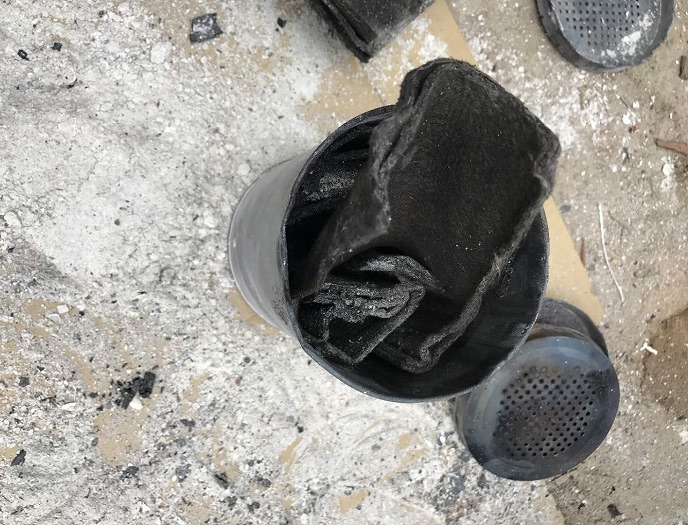
It is the test result of the used filter which went to the 2nd cool.
Although there was no explanation of the material, it seems that high concentration tar and the like had adhered to the glass type filter. By thermal decomposition for 3 days, it was tar carbonized adhering to the filter.
What level of carbon it was to take home survey. Everyone was told that it would be nice to be able to “nanocarbon”.
About a week, I did a test and got interesting results. If you would like to test pyrolysis before introduction, please contact us.
ASMETELL JAPAN .INC

We are doing questions, consultation and consulting about introduction.